- Sep 24, 2025
Why Circadian Rhythm Matters: Why Don’t We Do What We Know Helps Us?
- Quantum Eye Doc Dr. Valerie Giangrande
- Circadian Rhythm and Light
- 0 comments
Most people would agree they don’t want cancer, dementia, diabetes, autoimmune conditions, cardiovascular disease, or depression. These are the diagnoses that change lives forever. And yet, research has made it clear that circadian rhythm disruption is linked to all of them. In fact, circadian disruption is now considered a fundamental driver of modern chronic illness. Hundreds of studies link mistimed light exposure to metabolic, neurological, and immune disorders. And it isn’t just about the diseases that may appear years down the road. Even short-term circadian disruption can leave you feeling drained, foggy, moody, and unable to sleep well. Low energy, sugar cravings, weight gain, and poor focus are all early signs that the body’s timing system is out of sync. Left unchecked, those small daily disruptions build into the very chronic diseases we fear most.
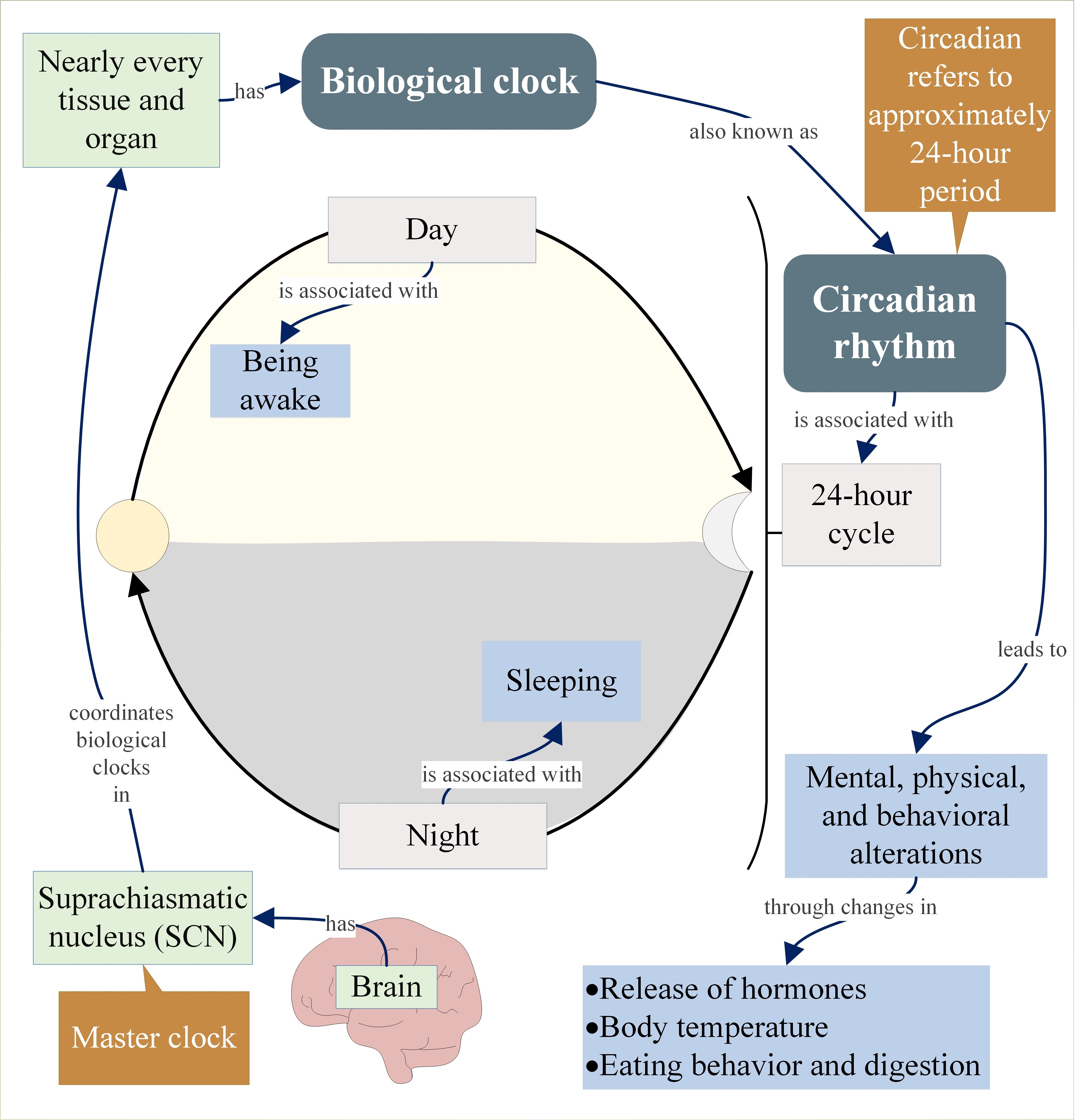
Every process in the body is tied to internal timekeepers, or clock genes. They’re what tell your organs, tissues, and cells not just what to do, but when to do it. These genes run on 24-hour cycles, known as circadian rhythm. Light and dark cycles are the strongest regulators of these clocks, constantly resetting them so your body stays in sync with the outside world. That means light entering your eyes sets every clock in the body through its connection to the master clock in the hypothalamus, the suprachiasmatic nucleus (SCN).
Even your eyes have their own clocks: to know when to regenerate photoreceptors, when to increase hydration, and when to upregulate processes to help vision during the day and night. Retinal dopamine helps the eye adapt to bright daylight. Retinal melatonin helps prepare the eye for darkness and repair. Even eye pressure and tear film follow circadian timing. This entire system depends on receiving the correct light signals, beginning with sunrise.
When those clocks are out of sync with natural light and dark cycles, the risk of disease increases. Hormones, metabolism, immune resilience, cardiovascular rhythm, mood, even the brain’s ability to repair itself all depend on circadian timing.
The research is staggering. We often look to changing our diet or joining a gym as the pathway to health, but none of those efforts are truly optimal if the very cells processing that food or the systems helping us handle exercise are running out of sync. Light is the driver of life. It powers up our electrons, our energy source, literally charging our cellular batteries.
We are electrical, light-based beings, designed to run on the rhythms of the sun.
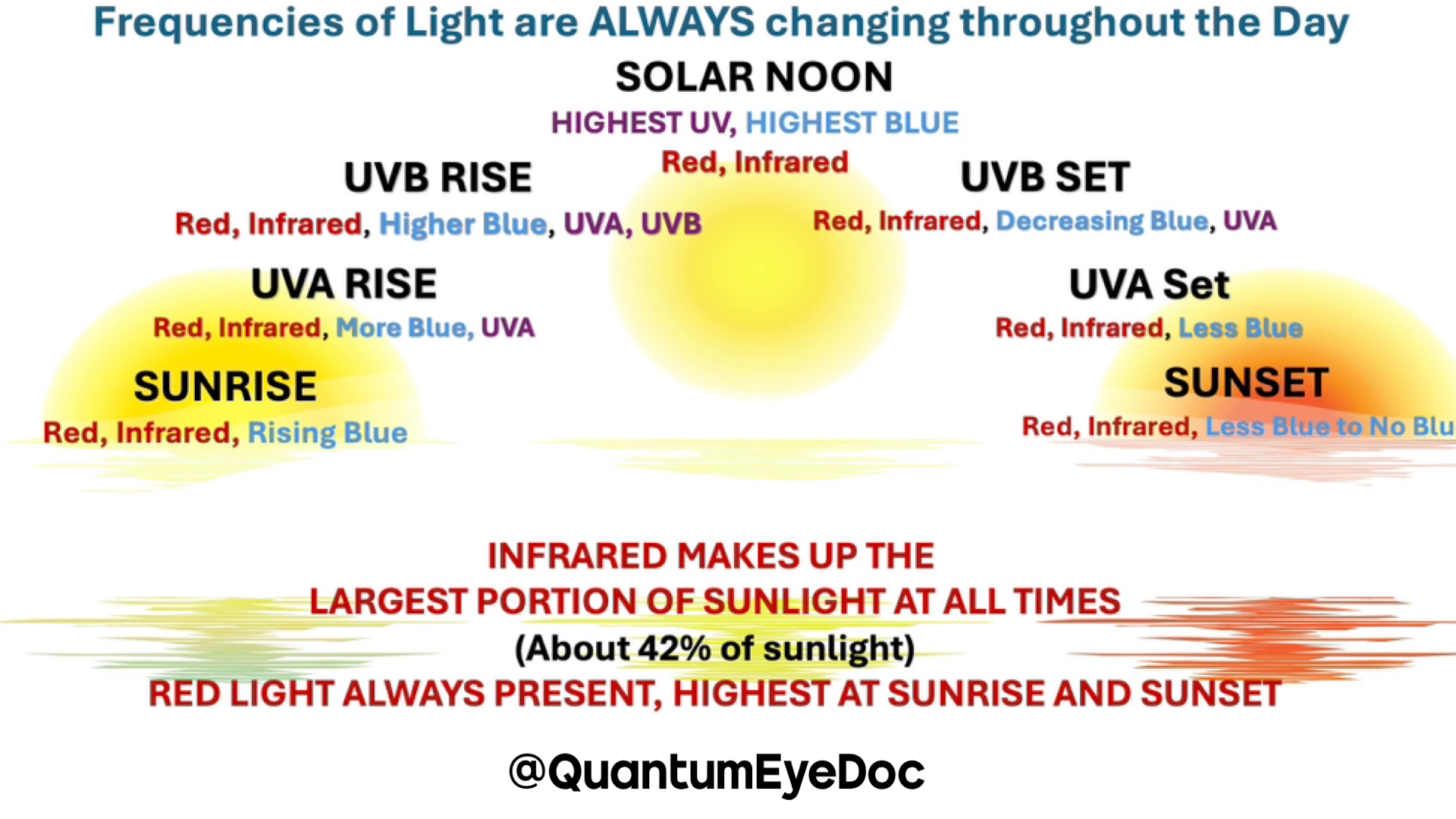
One of the most powerful signals is sunlight. Sunrise begins the cascade, triggering the morning release of cortisol, hormones, and energy. As the sun strengthens, each added layer of light brings new regulation: neurotransmitters and neurohormones, nitric oxide for vascular health, shifts in mood and immunity, vitamin D production (depending on season), and the signals that ultimately lead to melatonin, rest, and repair. Infrared light, present in abundance in sunlight from sunrise to sunset, works quietly in the background, hydrating tissues, supporting repair, and calming inflammation. Each of these layers matters. And darkness on the other end is just as important as light. Without darkness, the entire system falls out of sync.
Indoor lighting sends a very different message. The unbalanced, spectrally incomplete signals from LEDs and fluorescents confuse the body and oxidize tissues. To your circadian system, it looks like noon all the time. The clocks never get the update that night has fallen. And unlike sunlight, artificial light is missing this steady infrared foundation, one reason indoor life leaves us depleted while time outside restores us.
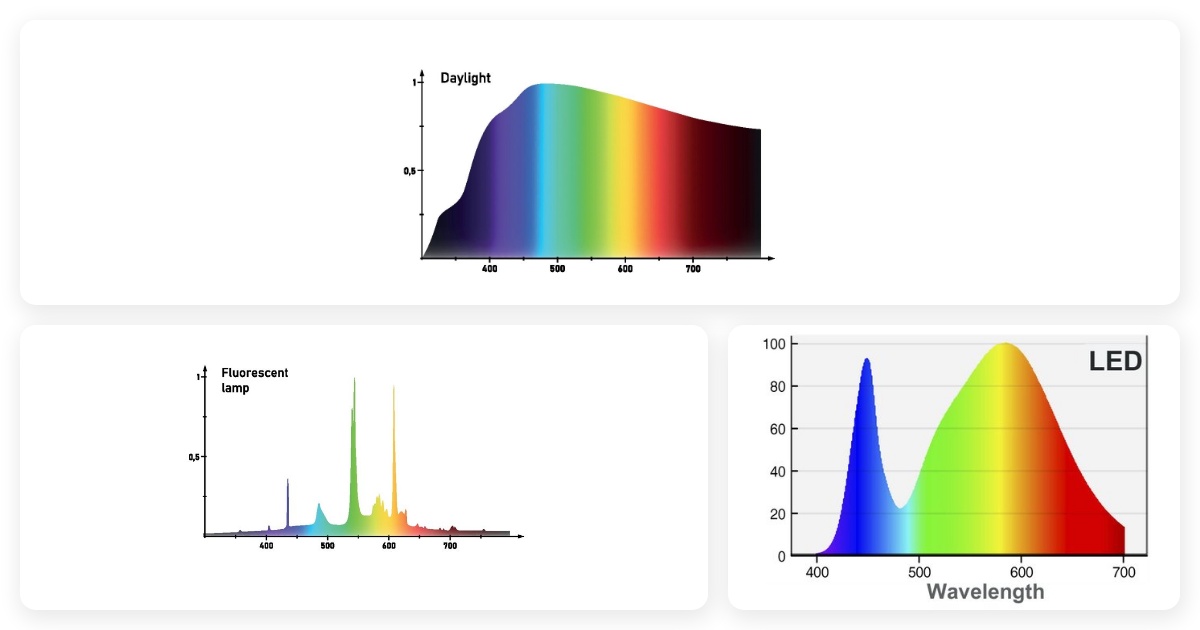
When those signals are missing or mistimed, the operating system of the body is never updated. It is like trying to run software on your computer when the operating system has not been updated. Programs crash, files get corrupted, and nothing runs smoothly.
And here’s the puzzle. Even when we understand how much is at stake, most people still don’t follow through. Psychologists call this the “knowing–doing gap.” We know something, but we don’t always act on it. I can’t tell you how many times I’ve tried to explain this and people nod along, but then say things like, “I just don’t want to wear those orange glasses at night,” or “I know I should get morning light, but I don’t have time,” or “I stay up late because it’s the only quiet time I get to myself.” The truth is, we all have reasons, and sometimes those reasons feel valid in the moment. Sometimes it’s convenience, sometimes it’s habit, sometimes it’s that the benefits feel invisible at first. Missing one sunrise doesn’t cause immediate pain. Staying up late under bright overhead lights doesn’t feel catastrophic in the moment. But the cumulative effect of circadian disruption matters. Over time, mistimed light signals quietly steer our health in one direction or another.
I don’t say any of this to lecture. Honestly, I say it because I’m fascinated, and sometimes frustrated, by how often we overlook the basics. We chase complicated protocols, expensive supplements, and trendy health hacks, all while ignoring the simplest foundation: circadian alignment. The rhythms of the sun. The cues our biology evolved to trust.
My invitation is simple. Choose one thing. Step outside at sunrise for just five minutes. Stay out a little longer for the UVA rise. Put on orange blue-blocking glasses after sunset. Close your laptop earlier. Eat your last meal a little closer to daylight. Stand barefoot on the ground for a few minutes and notice how it feels. See what shifts in your body and your mind. Because once you actually feel the difference, it stops being a chore and starts being a lifeline.
Our bodies are already wired for health. They just need us to give them the right signals.
Dr. Valerie Giangrande
Optometrist & Quantum Eye Doc